Significance of Plants and Gardens in Victorian Culture
“I only wanted to see what the garden was like, your Majesty—” “That’s right,” said the Queen, patting her on the head, which Alice didn’t like at all: “though, when you say ‘garden’–I’ve seen gardens, compared with which this would be wilderness.”
Alice didn’t dare to argue the point, but went on: “–and I thought I’d try and find my way to the top of that hill—“
“When you say ‘hill,’” the Queen interrupted, “I could show you hills, in comparison which you’d call that a valley.”
“No, I shouldn’t,” said Alice, surprised into contradicting her at last: “a hill ca’n’t be a valley, you know. That would be nonsense.”
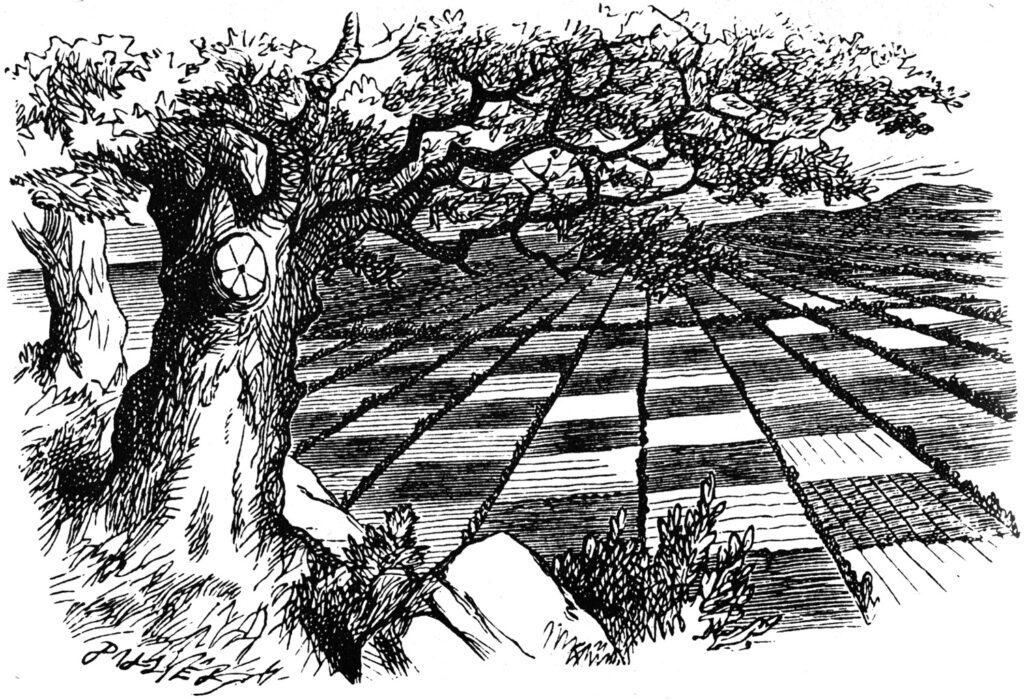
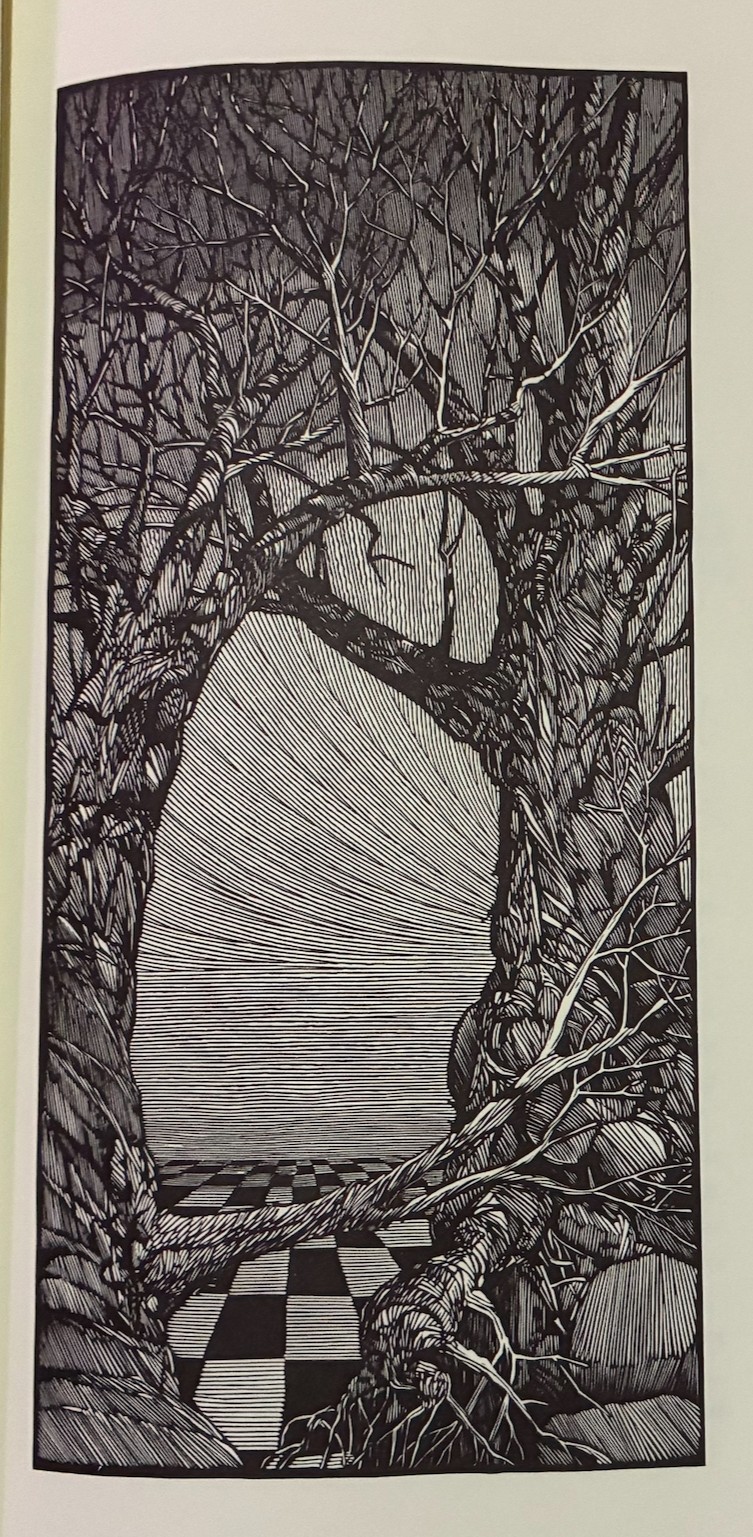
To fully understand the significance of nature in the Alice books, we need to better grasp what nature meant to people at the time that the book was created. The Red Queen’s comment that she’s “seen gardens” shows the particularity of defining and maintaining green spaces in that era. The nature of the exchange centers around land that is shaped in an evenly divided chess board, but it is still not up to the Red Queen’s standard’s. Tenniel’s illustration focuses on the expansiveness of the chessboard. Moser’s illustration puts more emphasis on the wilderness surrounding the chessboard. To the Red Queen, nature is something that must be consistently maintained and if it isn’t it’s not deserving of her attention. Her strong opinions on nature, also represent the constant association between girls and gardens during that time.
Significance of Plants and Gardens in Victorian Culture
Victorian girls were often associated with gardens because they represented grace. People believed that taking care of a garden helped them to develop womanly qualities like raising children and becoming a devoted wife. Victorian women’s strong pull towards gardens is the main motivator for Alice’s adventure’s in both books. After Alice went through the rabbit hole and through the looking glass, she glimpsed a garden from the distance and thought it was so beautiful that she needed to get to it. Additionally, she believes that the garden will be a safe-space from the nonsense rules of Wonderland.
Carroll’s New Flower Language
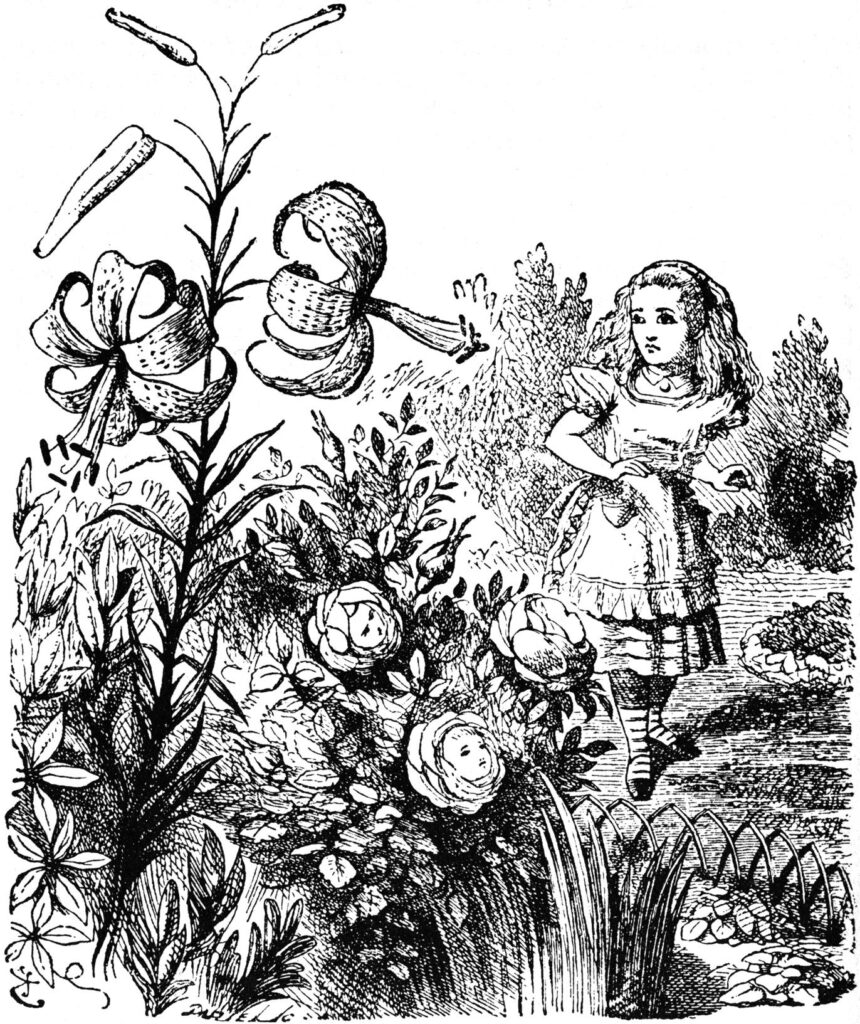
“It’s my opinion that you never think at all,” the Rose said, in a rather severe tone.
“I’ve never seen anyone that looked stupider,” the Violet said, so suddenly that Alice quite jumped; for it hadn’t spoken before.”
The Victorian Era has been nicknamed the flower-age because of the close relationship between culture and flowers. The obsession with flowers caused each flower to attain a different meaning. The categorization came to be known as the Language of Flowers. If you gave someone a certain set of flowers, that would tell them what you viewed your relationship to look like.

Carroll’s New Flower Language
In the quote taken from Looking Glass, Carroll gives the flowers the power of speech and turns them into Alice’s bullies. All of the flowers are the opposite of the characteristics that they are ascribed by Flower Language. They take agency and make Alice feel dwarfed by ascribing her with baseless attributes about her identity. The role reversal critiques the need for society to impose one definition onto an object, instead of letting it stand on it’s own. Tenniel’s illustration focuses on the flowers as a whole, but Moser’s focuses on the Rose. Tenniel counters defining individuals by putting the group as a whole at the forefront. Moser’s illustrations single out particular flowers to stress the qualities that they have that oppose their traditional Flower Language traits. Additionally, it makes Alice question her purpose within the system. Her role at the time is imposed by the link between girls and gardens, but the bombardment of insults slung at her by the flowers causes her to reevaluate her ideas that nature is safe and elegant. Which in turn, causes her to meditate on her relationship to nature with a newfound perspective.
Danger in The Garden
“A large rose- tree near the entrance of the garden: the roses growing on it were white, but there were three gardeners, busily painting them red. Alice thought this was a very curious thing, and she went nearer to watch them, she heard one of them say “Look out Five! Don’t go splashing paint all over me like that.”
Typically in fantasy stories, the forest is a perilous place with many obstacles. But in Wonderland, the woods is a place that provides safety even though Alice believes that the gardens will provide that. In reality, the gardens are the center of the chaos in Wonderland.
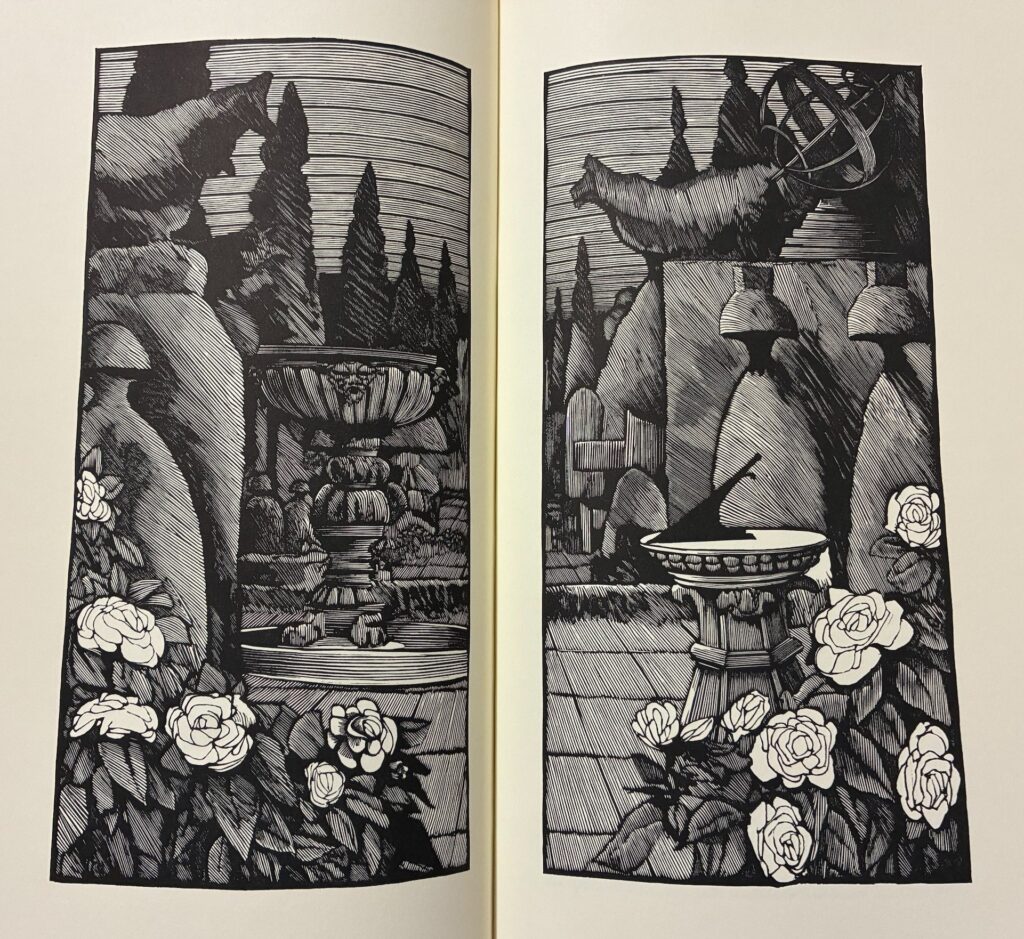
The exchange between the cards in Alice’s Adventures, demonstrate the dire consequences that result from improper upkeep of the Queen of Hearts gardens. Her card servants make the mistake of growing white roses instead of red roses. Their attempt to cover it up, by painting the roses red, get their heads chopped off. Similar to the comment from the Red Queen, the Queen of Hearts views nature as beautiful if her servants take care of it the way she sees fit. She takes offense to any action against her garden in the same way that she would if it was against herself, as if her garden was an extension of herself. Both of the illustrations depict similar ideas about the strict shape of the topiaries and the gardens being surrounded by walls to protect and show off what has been grown. There is an absence of people in Moser’s and it shows the view from inside the walls. But, Tenniel’s has a view from outside with a peek into the garden from above the wall.
Danger in The Garden
The Queen of Hearts, who is a foil to Alice, is embodied by the garden. The garden, which commonly stands in for the traditional roles of the wife and mother, critiques the gender norms that Victorian society imposed upon women. Rather then helping the Queen to become delicate, her connection with gardens is the source of her ferocity. Furthermore, she is the dominant partner in her relationship with the King. Her pride in her kingdom causes her to take on obligations associated with men, including making the King take care of domestic responsibilities.
Influence on Identity
“We gave you the opportunity of doing it,” the Red Queen remarked: “but I daresay you’ve not had many lessons in manners yet?”
Garden’s in Alice’s Adventure’s are used to point out the flaws of someone’s character and/or society, but in Looking Glass they are used to guide the plot and show Alice’s growth. The garden is shaped like a chess board in Looking Glass and Alice’s goal is to get to the end of the board to become a queen. Each square on the board is a different person and/or thing she must face to get there. Her journey to become queen forces her to grow her relationships with other Looking Glass creatures. These meetings with the creatures in turn change what choices she makes on the next square. Her status as a pawn in this garden at the beginning of the book also points out the box and fixed path that Victorian girls were forced into by society.
Influence on Identity
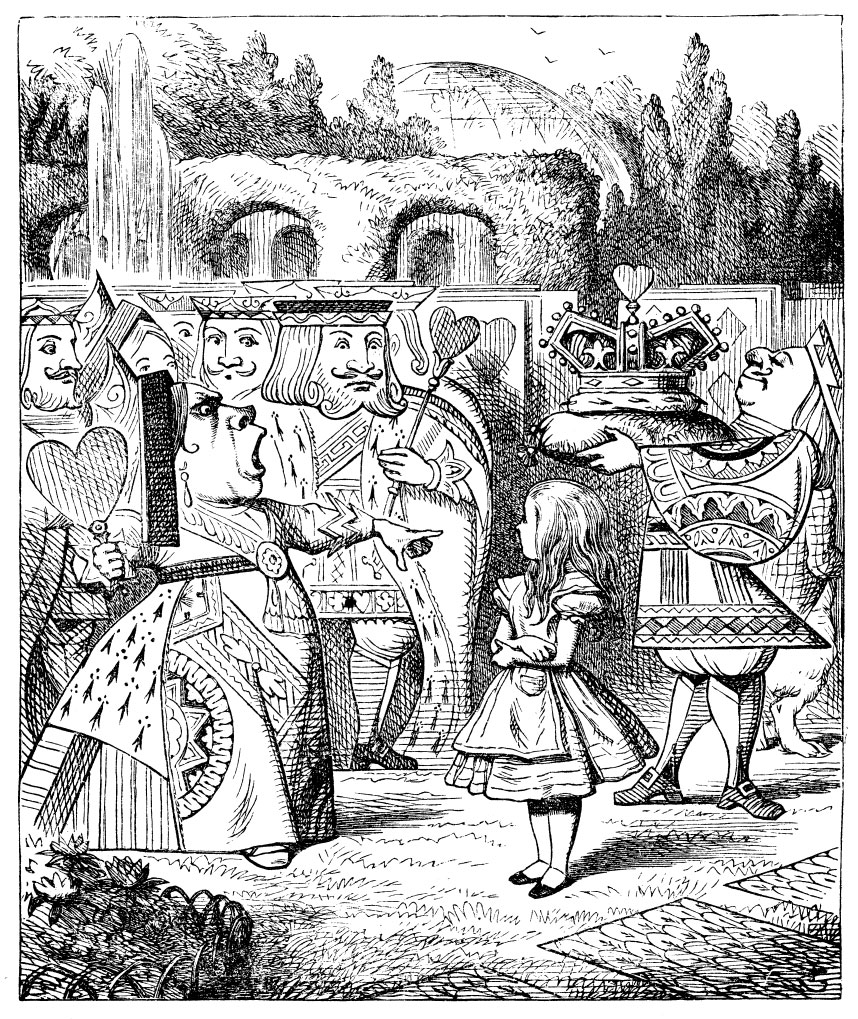
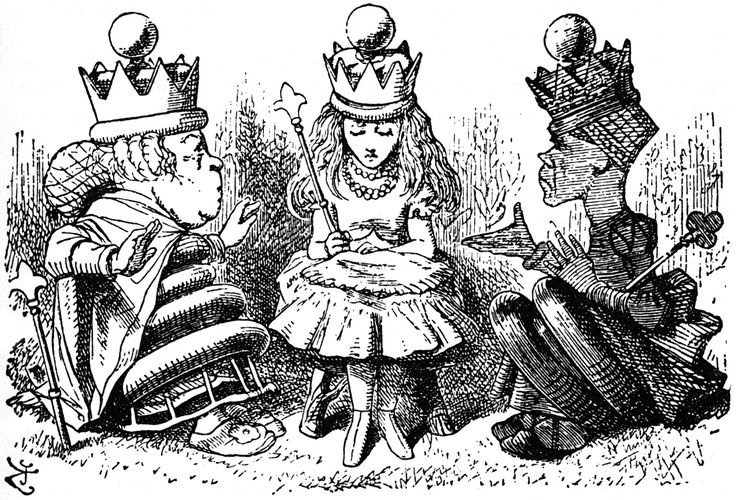
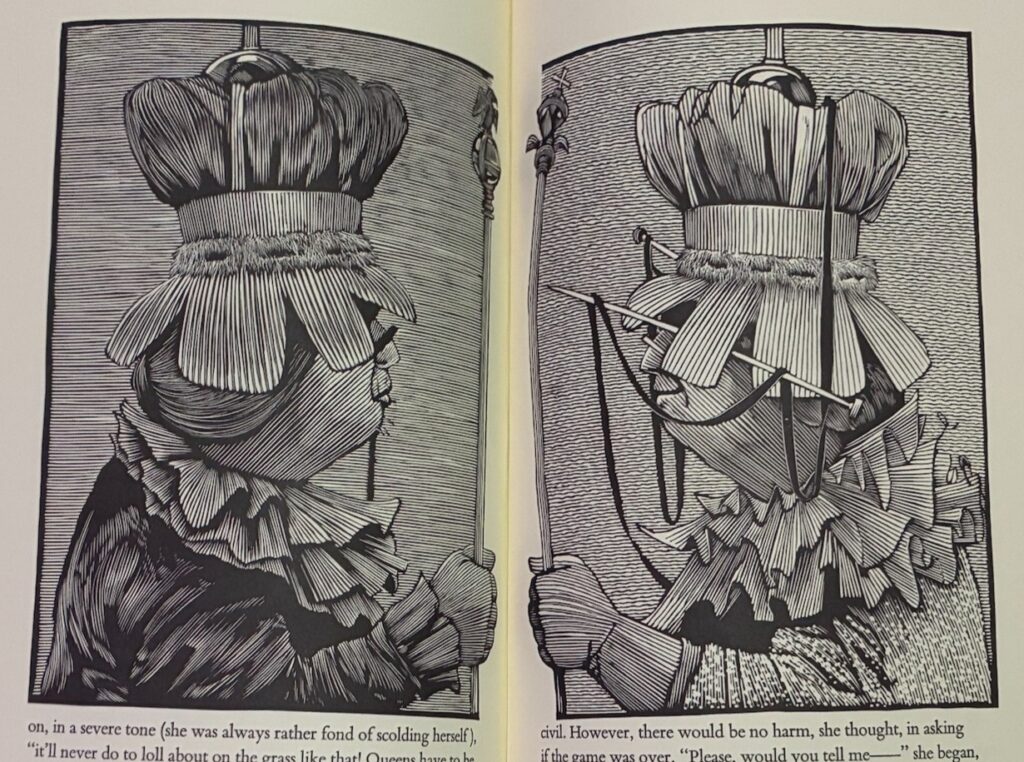
The Red Queen and White Queen, who already completed their transitions and became queens, guide Alice and help her to become a queen. They enforce the fixed path of the chess board onto her because that’s the only way they were taught to navigate life. The enforcement of these negative ideas represents Victorian women’s belief in certain ideas about the world because of the depth of misogyny ingrained in society to the point of changing how women perceive self-worth. Tenniel’s illustration has Alice as the center, exposing her conflicting feelings about the queens treatment of her. Moser’s illustration is only the queens, showing how similar the appearance they maintain is to spotlight the fixed path concept.