Slow Motion in the Rabbit Hole
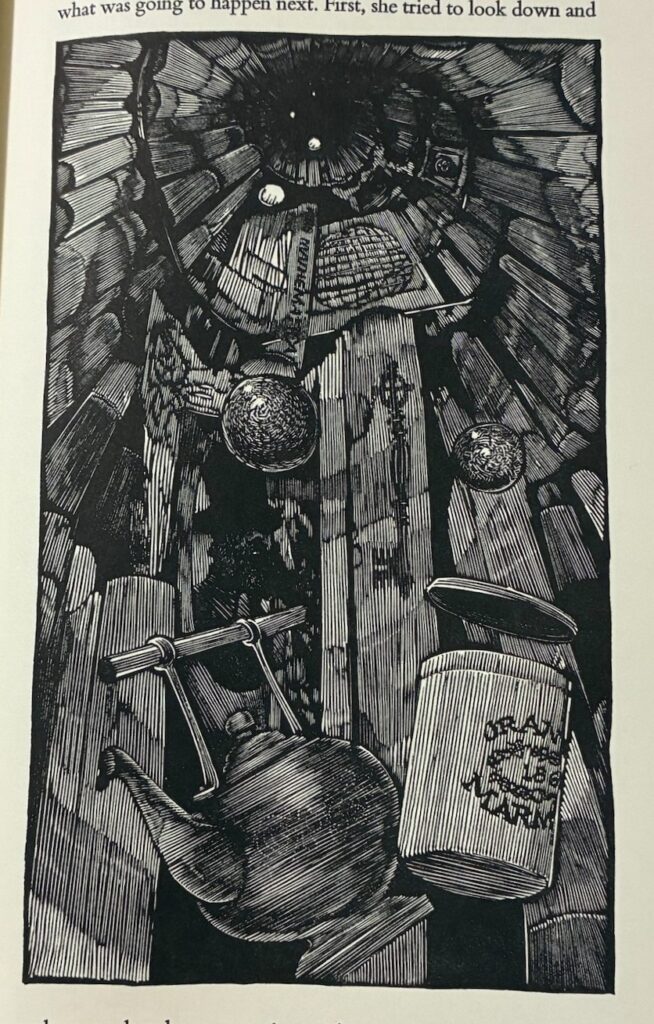
“Either the well was very deep, or she fell very slowly, for she had plenty of time as she went down to look about her, and to wonder what was going to happen next. First, she tried to look down and make out what she was coming to, but it was too dark to see anything: then she looked at the sides of the well, and noticed that they were filled with cupboards and book-shelves: here and there she saw maps and pictures hung upon pegs. She took a jar from one of the shelves as she passed: it was labeled “ORANGE MARMALADE,” but to her great disappointment it was empty: she did not like to drop the jar, for fear of killing somebody *underneath, so managed to put it in one of the cupboards as she fell past.”
*Pennyroyal edition doesn’t have underneath included in description
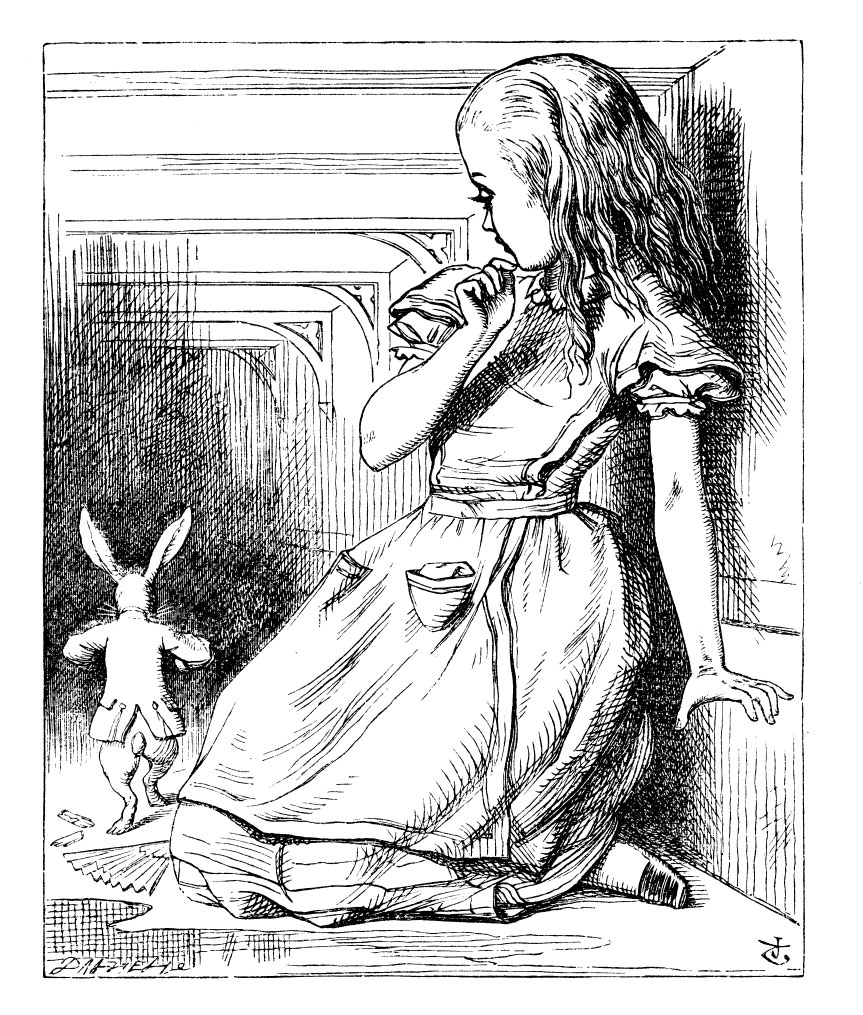
The quote describes the odd objects floating in the rabbit hole when Alice goes in it. Once Alice lands, the objects do not follow suit. In the Penguin Classics book, the text includes the word “underneath.” This implies the objects do eventually land at the end of the hole. The exclusion of “underneath” in the Pennyroyal edition, reads, as Alice fears, that if another person enters the hole the objects will hit them, instead of the jar dropping and breaking at the bottom of the hole. The objects are also not disconnected. They are items used to decorate a room in a house. The slow motion cues Alice into the change in the flow of time, but the objects create a welcoming atmosphere for Alice. The illustration accompanied with the quote in the Penguin Classics edition appears right after Alice lands at the bottom of the hole. The edition illustrated by Moser, on the other hand, illustrates the moment when Alice falls through the hole, giving the reader more insight into how gravity functions in Alice’s topsy-turvy world.
Slow Motion in the Rabbit Hole
Additionally, Alice enters this rabbit hole because she found it incredibly odd that the White Rabbit was checking the time and managing business as though he were human. Carroll foreshadows how the social hierarchy operates in Wonderland by showing the White Rabbit speaking and performing sophisticated tasks by using his watch.
Time and The Tea Party
“Well I’d hardly finished the first verse,” said the Hatter, when the queen *bawled out ‘He’s murdering time! Off with his head!’”
“How dreadfully savage!” exclaimed Alice.
“Ever since that,” the Hatter went on in a mournful tone. “He won’t do a thing I ask! It’s always six o’clock now.”
*Pennyroyal edition says that the Queen, “jumped up and bawled out.”
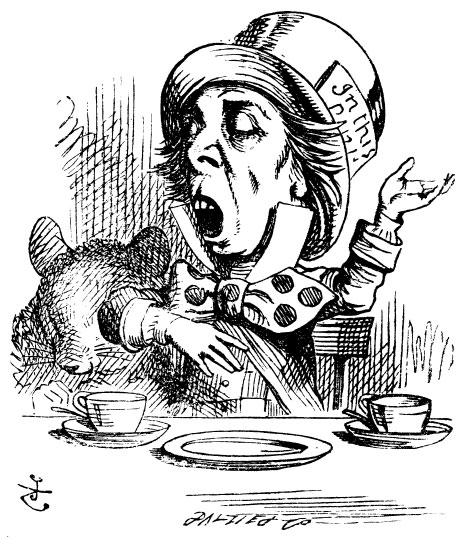
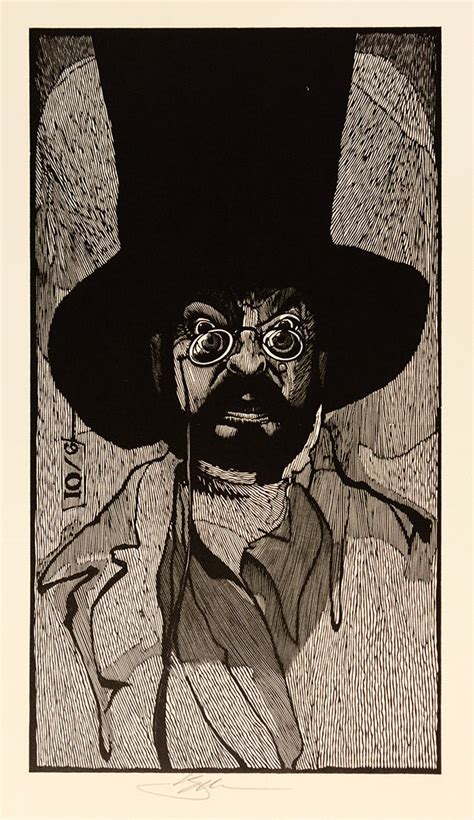
The quote was taken from the section during the tea party, when the Hatter reveals to Alice information about how time works in Wonderland. He claims that the Queen got so outraged with him that it caused Time, who is a person, to freeze time and they must repeat the same tea party. Time being a person is not mentioned in any other instance besides this and in a future chapter the Hatter is seen in the Queen of Heart’s courtroom. There could be several inferences about his actions and the contradictions in his story. The Hatter is so mad to a point where he believes that he is stuck in time and Time is not a person. Time is a person who has made the Hatter believe he is stuck in time. He is stuck in time, but when it comes to matters of the Queen he is at her disposal.
Time and The Tea Party
In the Pennyroyal edition, the Queen jumped up and bawled out. But in the Penguin Classics edition, the Queen only bawled out. This small change impacts the severity of the situation and his punishment. The Hatter’s appearance conveys his personality, through which we can make inferences on his interaction in the conflict and how he views what Time did afterwards. In Tenniel’s illustration, the Hatter is depicted singing and has very eccentric clothing. In Moser’s illustration, the Hatter has a serious expression and muted clothing. The reader can surmise that Tenniel’s Hatter is frustrated with the situation, but makes due with it. Moser’s Hatter has had trouble dealing with the effects of the punishment.
Looking Glass Logic
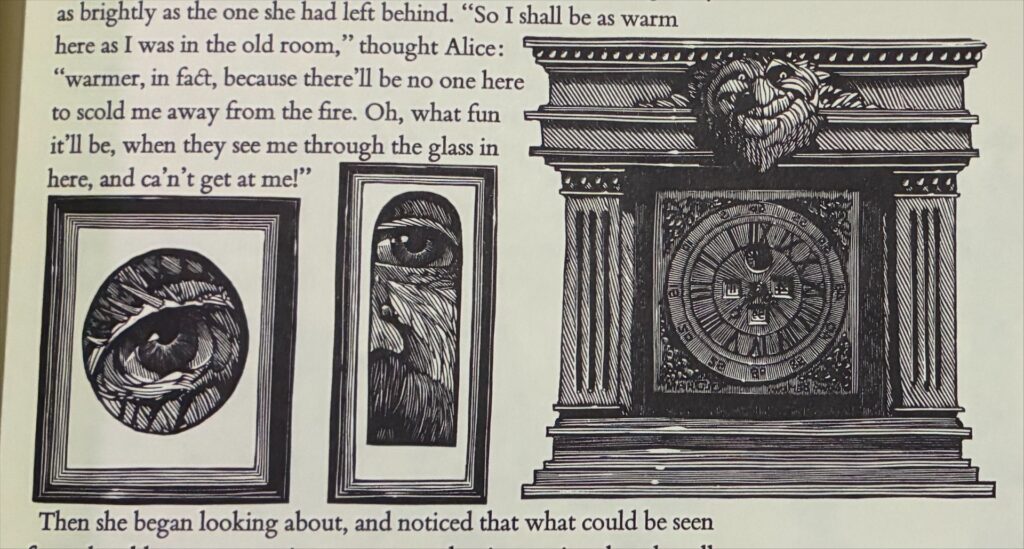
“Now, if you’ll only attend, Kitty, and not talk so much, I’ll tell you all my ideas about Looking Glass House. First, there’s the room you can see through the glass.–that’s just the same as our drawing room, only the things go the other way.”
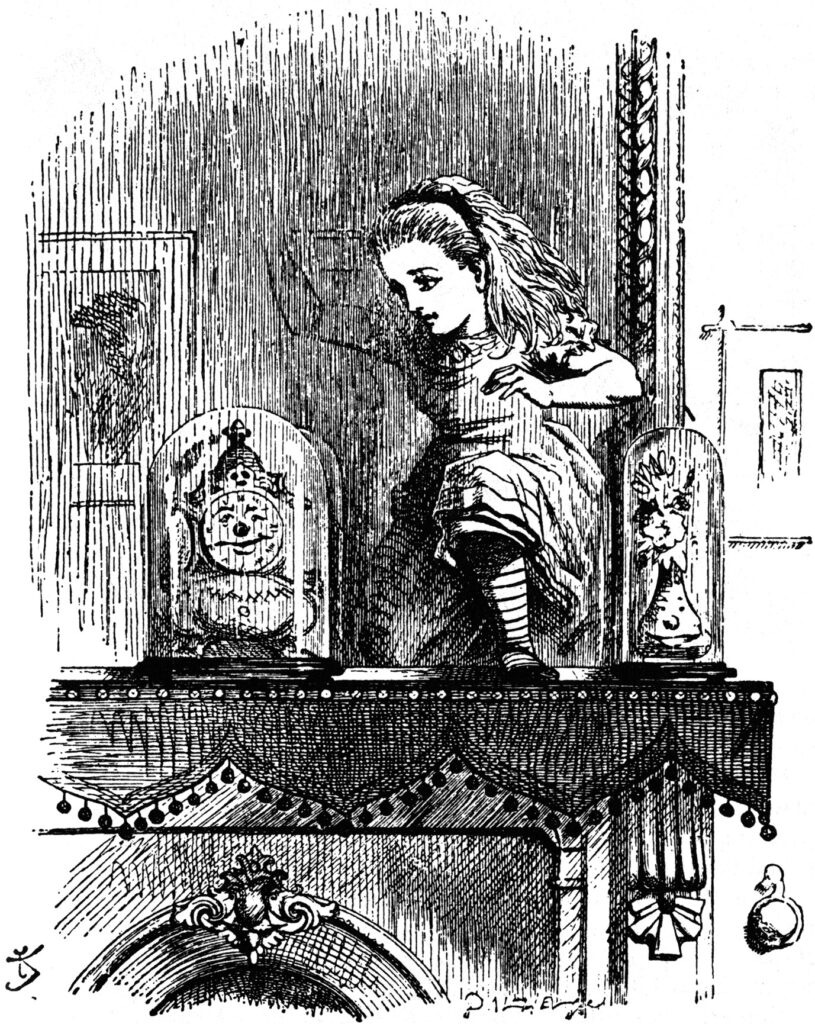
At the start of Looking Glass, Alice explains to her cats the laws of the Looking Glass world. The principle rule being that everything is backwards because it’s the other side of the mirror, which implies time is backwards as well. There are clocks pictured in both of the illustrations of Alice going through the looking glass. In Tenniel’s illustration, the clock has a grinning face on the clock face and you cannot see the time. Moser’s illustration pictures individual items within the first looking glass room. The drawing of the clock shows that the numbers on the clock are backwards, or, as the text puts it, “things go the other way.”
Looking Glass Logic
The environment is as haywire as Wonderland, but this chaos is dictated by reason. When Alice has questions about her surroundings, she’s able to get them answered. The answers are still somewhat confusing, but even so, they give her a better idea of how to adapt to the world around her. Even though things are backwards, there’s consistency that was lacking from Wonderland.
Two Moves Ahead
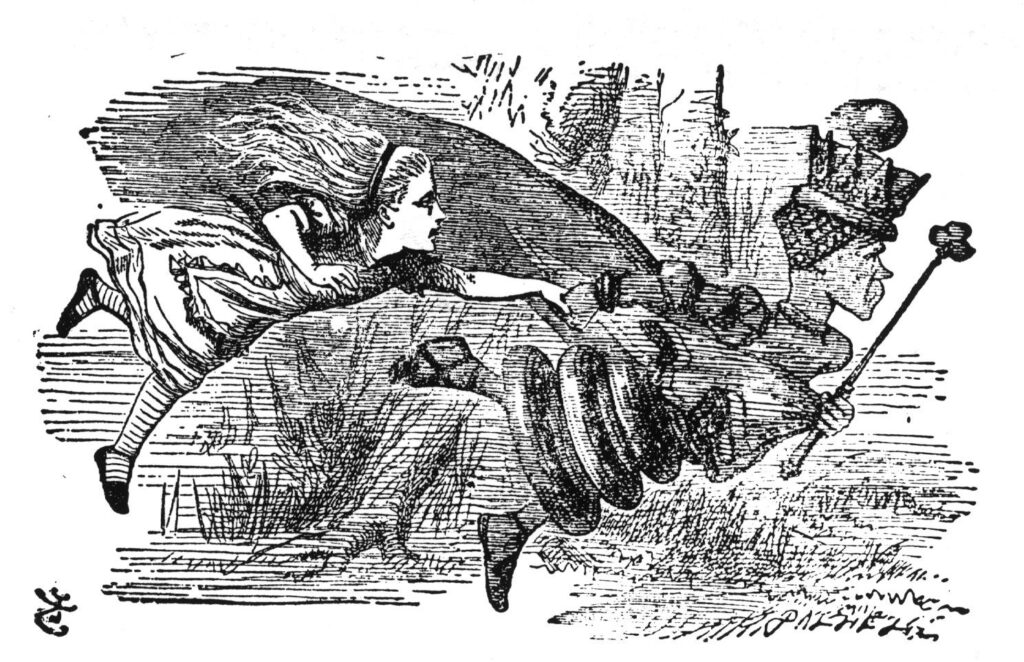
“A slow sort of country!” said the Queen. “Now, here, you see, it takes all the running you can do to keep in the same place. If you want to get somewhere else, you must run at least twice as fast as that.”
When the Queen travels with Alice, she explains that it takes greater speeds to get to other locations in the Looking Glass world. This rule affects how she adapts to her new environment and the placement of things in the environment. In the illustrations for this passage, Tenniel depicts the Red Queen bolting through the landscape while dragging Alice behind and Moser only shows the Red Queen standing alone. Tenniel gives readers a better idea of how fast someone must go to get where they are going in this world.

Two Moves Ahead
Questioning the world around us is one of the main points of the Alice in Wonderland stories. Some questions are raised about travel in the looking glass world. Moving twice as fast towards your desired location is also confusing. According to the logic of this world, everything is backwards: wouldn’t you go farther away from where you want to go to get there? How was it decided where locations should be placed and was it influenced by the twice as fast traveling speed used by citizens? Who or what determines what is placed on each square of the chess board? Is that also impacted by traveling speed?